
 Whatsapp
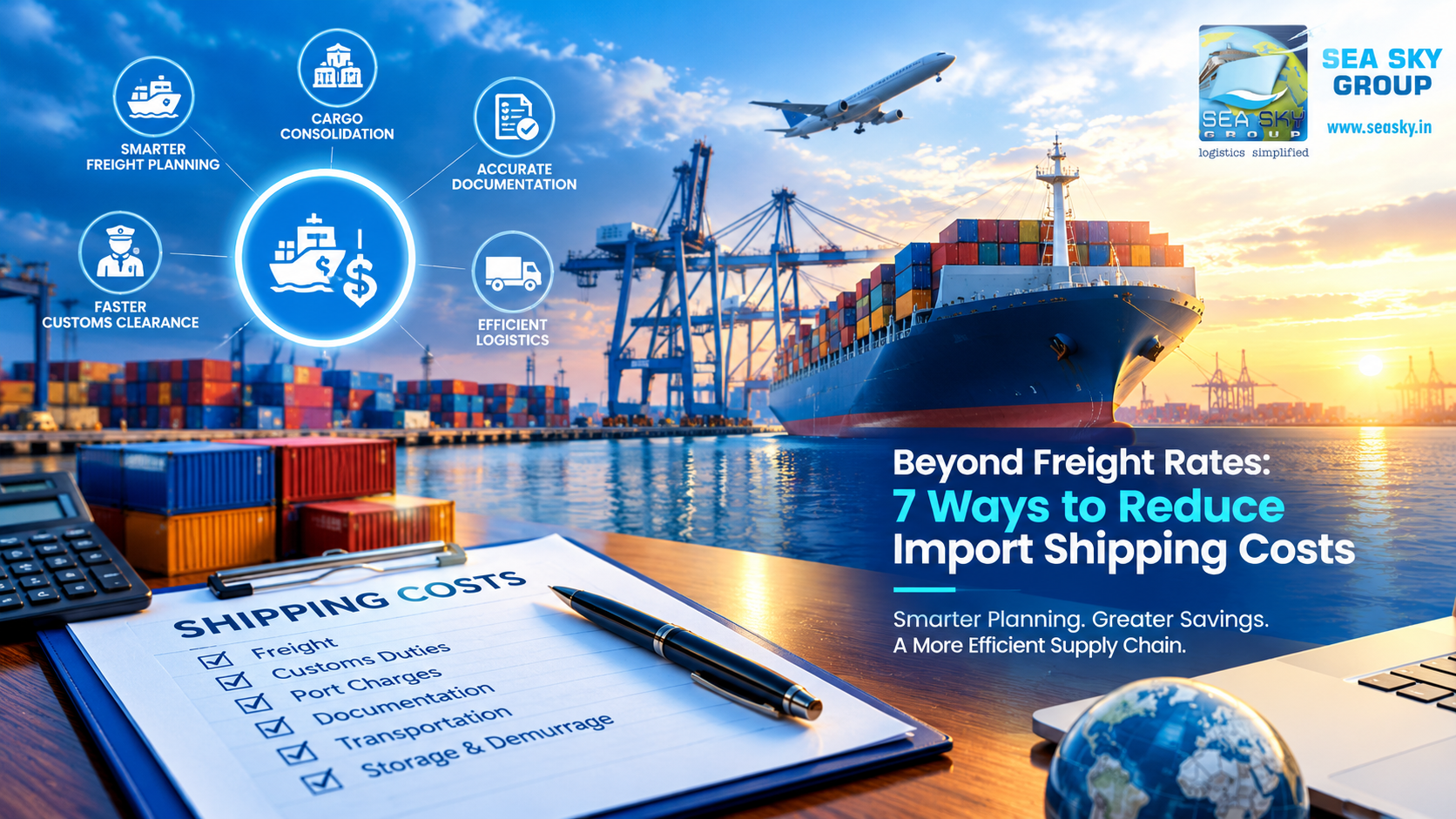
For importers, shipping costs involve much more than the freight rate quoted by a shipping line or logistics provider. Customs duties, port charges, documentation errors, storage fees and unexpected delays can significantly increase the total cost of bringing goods into a country. A smarter logistics strategy looks at the entire shipment—not just the freight quote.
Look Beyond the Freight Quote
In a competitive global market, businesses need to balance cost, speed, reliability and regulatory compliance. A low freight rate may not be the best option if additional handling, destination charges or delays increase the final bill. Here are seven practical ways importers can manage shipping expenses more effectively.
1. Compare the Total Shipping Cost, Not Just Freight Rates
Different quotations may include different services and destination charges. Before choosing a provider, compare ocean or air freight, origin and destination handling, documentation, customs clearance, inland transportation and any other applicable fees.
Request a like-for-like breakdown of charges so you can evaluate the estimated total cost and identify possible additional expenses before confirming the shipment.
2. Choose the Right Shipping Method
Air freight may suit urgent, high-value or time-sensitive goods, while sea freight can be a cost-effective option for larger consignments when transit time permits. The best choice depends on cargo volume, delivery deadlines, product value and the cost of holding inventory.
For smaller shipments, Less-than-Container Load (LCL) services may allow cargo to share container space. Compare the full cost and transit time of each option before deciding.
3. Consolidate Shipments Where Practical
Sending several small consignments separately can lead to repeated handling and transportation costs. When supplier locations and delivery schedules allow, consolidating cargo can make better use of available capacity and simplify shipment coordination.
Buyers consolidation can be useful for businesses purchasing from multiple suppliers. Always consider the extra handling, storage and timing requirements to confirm that consolidation provides a genuine overall saving.
4. Keep Shipping Documents Accurate
Incorrect or inconsistent paperwork can result in customs queries, amendments and clearance delays. Check that commercial invoices, packing lists, bills of lading or air waybills, certificates and other required documents are complete and consistent.
- Verify product descriptions and quantities.
- Check declared values and currency.
- Confirm the appropriate HS code and classification.
- Ensure country-of-origin details are correct.
- Arrange any applicable licences, certificates or approvals.
Early document checks and coordination with a customs clearance partner can help identify gaps before the shipment arrives.
5. Plan Customs Clearance in Advance
Importers should identify applicable duties, taxes, permits and product-specific compliance requirements before dispatch. Share shipment details and documents with the relevant parties early, and confirm that required approvals are in place.
Coordinating suppliers, freight forwarders, customs brokers and consignees helps reduce avoidable delays. Customs requirements vary by product and destination, so verify the rules that apply to each shipment.
6. Avoid Demurrage, Detention and Storage Charges
Delays in clearance, collection or container return can lead to additional charges after the applicable free time. Good planning and timely communication are essential to controlling these avoidable expenses.
Track arrival dates, prepare documents early, arrange transport and warehouse availability, and monitor free-time deadlines. Act on potential delays before extra charges begin.
7. Work With an Integrated Logistics Partner
Coordinating freight booking, documentation, customs clearance, transportation and warehousing through disconnected arrangements can make it harder to monitor cost and timing. An integrated logistics partner can help align these activities, improve shipment visibility and identify practical efficiencies.
Sea Sky Group provides logistics solutions across sea freight, air freight, customs clearance, NVOCC operations, buyers consolidation and value-added services. The right combination depends on each shipment's cargo, route, timeline and compliance requirements.
Make Every Shipment Count
Reducing import shipping costs is not simply about negotiating a lower freight rate. It requires a complete view of the shipment—from supplier coordination and cargo planning to customs clearance and final delivery.
By selecting the right transport mode, consolidating cargo where appropriate, maintaining accurate documentation and planning clearance in advance, importers can improve cost visibility and reduce avoidable expenses.
“Smarter shipping starts with looking beyond the freight rate.”
Sea Sky Group
Looking for smarter import and export logistics solutions? Connect with Sea Sky Group to discuss your shipping requirements.
Explore Our Services